

-
Licentie op maat
-
Digitaal / lage resolutie €60
-
Afdruk vanaf €70
-
Aanmelden
-
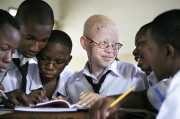
- Africa, Tanzania, Dar Es Salaam, September 2008
Copyright Dieter Telemans
Joyce 15 lives with her parents and an albino brother Peter Charles 8 in Mwandege Village , just outside Dar-es-Salaam. Both parents are working for the army. Justina 43 is a nurse and her husband is a lorry driver. Joyce is now in standard 2 in the Agape Mbabala Secondary School and is one of the best students. Her ambition is to become a doctor. She is a very confident girl and very much loved by her friends and parents. Her skin is very smooth thanks to the good care of her mother. Justina says they were initially very surprised to have an albino child because she canàƒâ€¢t recollect having another albino in the family. But therefore I donàƒâ€¢t love her less, she says. And because Iàƒâ€¢m a nurse, I knew how to take care of her skin. Especially when they are young, albinos should be taken very well care off. I always kept them inside and lotioned their skin on a daily basis. Although Joyce is living in a protective environment, she was recently terrified while waiting for the school bus. She overheard two men who were driving by on a bicycle. They said: Why wouldnàƒâ€¢t we kidnap that albino girl? We earn so little money, but by selling that girlàƒâ€¢s hair and skin we would get a fortune. Since 2007, Tanzania has known tens of albino killings: their body parts are used by witchcraft doctors to make magic potions and sell them with promises of instant riches.
Discrimination against albinos is a serious problem throughout sub-Saharan Africa, but recently in Tanzania albinos have been killed and mutilated, victims of a growing criminal trade in albino body parts. Albinos have a genetic condition that impairs normal skin pigmentation and strikes about 1 in 3,000 people here. They are often shunned as outcasts and most die of skin cancer before they reach 30. - 2008-11-06 00:00:00
- #191904
- No AI used in this image
- Portret release not available
- #albinism #albinoism #albinisme #afrika #tanzanie #albino #skin #huid #peau #kleur #colour #couleur #disability #infirmite #handicap #huidskleur #huidpigment #pigment #melanine #hypopigmentary #disorder #melanin #gene #inheritance #maladie #genetique
Maak deel uit van ID/

© ID/ photo agency
imageoffice bv
2010-2026
 Login
Login